At WashU Medicine, learning extends far beyond the classroom.
Along with community networks, student groups and local and global partnerships, our community engagement and service-learning initiatives provide you with invaluable opportunities to shape your professional identity, build trust with your patients and community, and contribute to society. These initiatives also reinforce content learned through the Gateway Curriculum, including social and structural determinants of health.
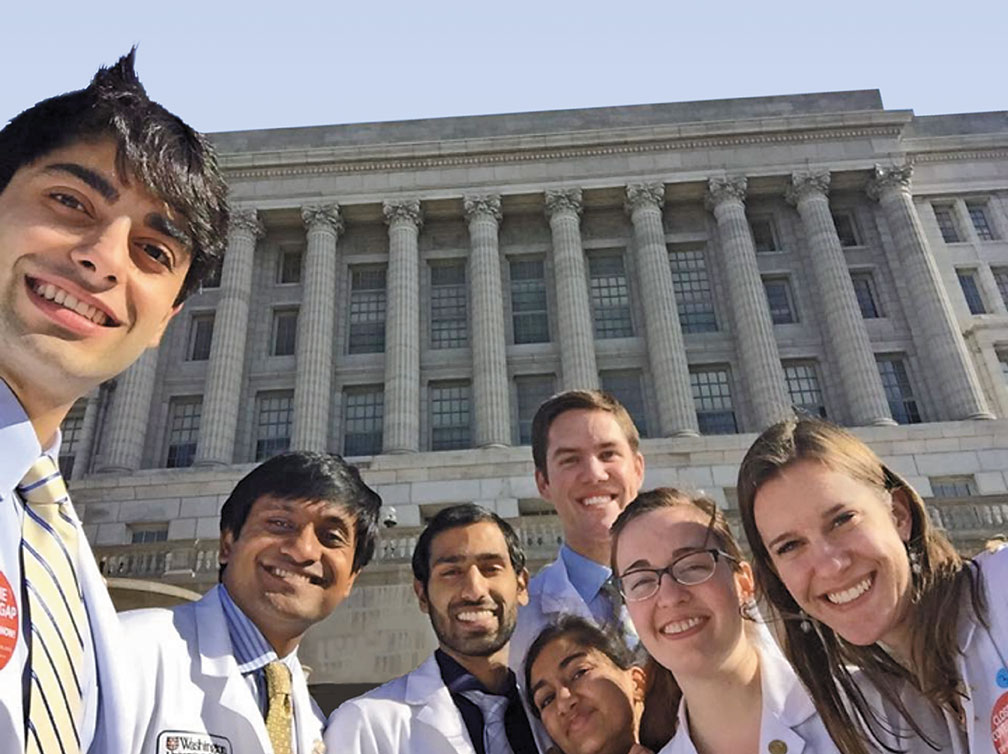
Service learning, community engagement and advocacy
Our students are committed to making an equitable difference on campus and in St. Louis. Opportunities for improving health outcomes throughout the local community include:
- Offering community-based screenings for hypertension, diabetes and early childhood development among underserved groups
- Leading CPR training in the newborn intensive care unit for parents of high-risk children
- Providing flu vaccinations to WashU Medicine faculty, staff and students
- Coordinating volunteers for American Red Cross Blood Drives
- Providing skin cancer prevention education for middle and high school students through Sun Protection Outreach Training (SPOTS)
- Teaching St. Louis families the principles of healthy eating through the Culinary Medicine Program, a nutrition branch of Health Outreach Programs
- Fundraising for community groups such as Big Brothers Big Sisters and The American Heart Association
- Improving the health and well-being of young teens at the St. Louis Juvenile Detention Center through CHOICES for Youth in Detention
- Enhancing health equity in St. Louis through training and experiential service in health access, incarceration justice reform, and intimate partner violence survivor advocacy via LouHealth — a policy and public health advocacy organization begun by WashU Medicine students
- Helping to keep the rivers of St. Louis clean by removing trash and debris from the local natural environment through Great Rivers Greenway
- Improving prenatal care for high-risk expectant mothers through the Perinatal Project student group
- Providing interprofessional clinical care at the Pro Bono Health Clinic, while also learning about social and structural challenges that patients face in our healthcare system
- Engaging with global health through events and international experiences via the Global Health and Medicine student group
- Working with Operation Food Search to distribute food, aid in nutritional education, assist with special events and support the MetroMarket
Explore the WashU Medicine Community Engagement Hub to find additional organizations that students may volunteer with to fulfill the service learning component of the Gateway Curriculum. If you have questions about service learning at WashU Medicine, please contact medcommunityhub@wustl.edu.
Clinical experience, community care
At the WashU Medicine Pro Bono Clinic, medical students collaborate with occupational therapy and physical therapy students to provide services to uninsured and underinsured members of the St. Louis community.
The student-led effort, under direct clinical faculty supervision, provides informed, compassionate care to patients and trains learners through hands-on opportunities that introduce them to clinical and nonclinical factors that impact health. The environment offers students the opportunity to refine patient interviewing skills, practice building rapport and master the art of letting patients lead the discussion.
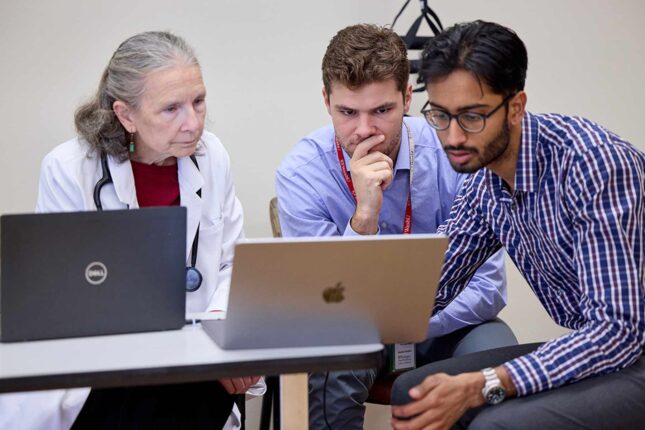
Sophia Dietz, a medical student and student leader at the clinic, appreciates that individuals can have three caregivers sit and listen to their story all at the same time, so patients do not have to navigate multiple facilities and appointments.
“It’s been inspiring to be a part of a community of individuals who are all specialists in their area, who then work together with the patient to come up with the best solutions to improve their condition.”
LEARN MORE:
Student-led clinic delivers much-needed care to uninsured members of the St. Louis community »
Mentoring local youth in STEM
Several WashU Medicine student groups engage St. Louis youth by providing educational assistance and illuminating pathways to careers in science and medicine. Examples include: